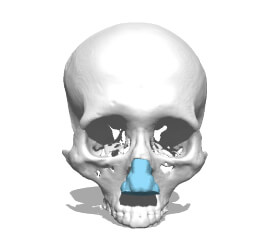
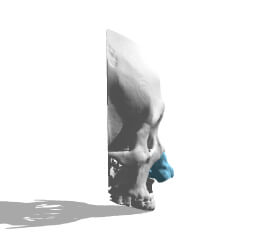
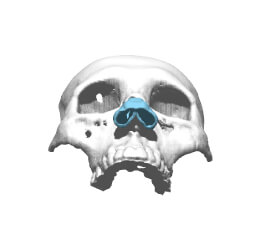
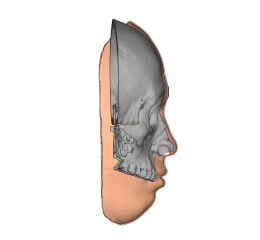
Cranial model that can reproduce the cartilage part of the nose
The nose, an important part that determines the impression of the face, is one of the most desired
organs for cosmetic surgery. Depending on the patient's desire to make the nose taller, smaller, or to
adjust the shape and nasal stripes, we perform nasal apexplasty, nasal septum extension, and nasal apex
plasty.
In order to avoid any deviation from the desired image, a thorough discussion is held between the doctor
and the patient before the surgery, but the patient's actual nose model may be reconstructed for the
discussion.
JMC Lab can reproduce a preoperative simulated model of the nose based on the DICOM data obtained from
CT and MRI provided by the patient. The nasal septum of the nose, which is particularly difficult to
reproduce, can be clearly reproduced.
Advantages of Using 3D Printers in Cosmetic Surgery
There are four advantages of using a 3D printer for preoperative simulation of cosmetic surgery.
Main uses
It is particularly useful for simulation applications in aesthetic and plastic surgery.
- Preoperative simulation of osteotomy, etc.
- Confirmation of procedures and treatment plans
- Accurate mold making for prosthesis, etc.
Contact Us